

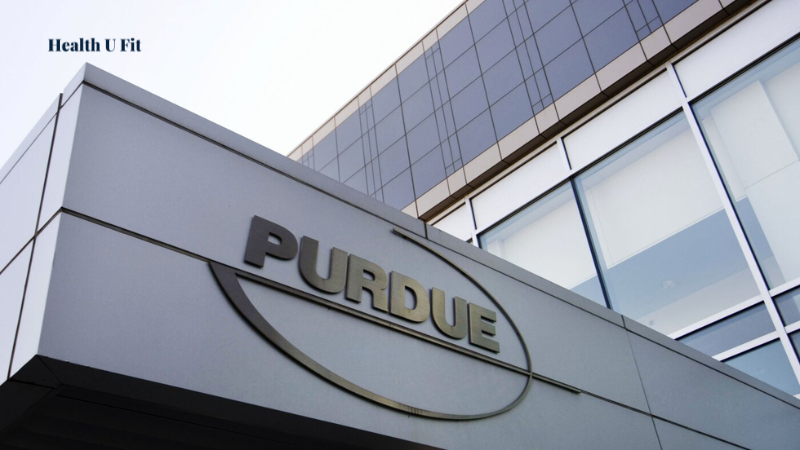
Purdue Pharma, the maker of OxyContin, was sentenced on Tuesday to pay $5.5 billion in fines and penalties following its 2020 guilty plea. The charges included misleading government regulators and providing kickbacks to doctors in order to increase opioid sales.
The sentencing, delivered in a federal court in New Jersey, allows the company to move forward with its bankruptcy plan. This step enables Purdue Pharma to dissolve and use its assets to support a $7.4 billion settlement aimed at compensating individuals and communities affected by the opioid crisis.
Before accepting the plea agreement, Madeline Cox Arleo of the United States District Court in Newark, New Jersey listened to nearly seven hours of testimony from individuals who spoke about the company’s role in worsening the opioid crisis in the United States. More than 200 victims submitted letters describing personal experiences of addiction and loss, while over 40 people addressed the court in person.
Judge Arleo also instructed Steve Miller to issue a direct apology to those affected. He complied, stating that the company “deeply regrets and accepts responsibility” for its past actions.
“We are deeply apologetic for all of the things that happened that were described in colorful detail by all the victims here today,” Miller said.
Madeline Cox Arleo also expressed an apology of her own, acknowledging that the government had multiple chances to intervene but failed to prevent Purdue Pharma from misleading doctors and patients about the addictive nature of OxyContin.
“Your government failed you,” Arleo said to the victims. “The inadequacy of what the law can offer today must be plainly stated.”
Several individuals who addressed the court argued that financial penalties alone were not an adequate punishment for Purdue Pharma’s actions. They urged that the company’s owners, members of the Sackler family, as well as its executives, should face prison sentences, and called on Madeline Cox Arleo to reject the plea agreement altogether.
“Punishment by a fine means ‘legal for a price’,” said Ed Bisch, who lost his son Eddie to an overdose in 2001.
LIMITS OF PUNISHMENT
Madeline Cox Arleo said she could not sentence any executives or owners of Purdue Pharma to prison because the United States Department of Justice had filed charges only against the company, not against individuals.
Madeline Cox Arleo said that accepting the plea agreement was the best outcome available under the circumstances, while expressing hope that future cases would be handled differently so that corporate offenders do not come to view fines as simply a “cost of doing business.”
Under the agreement, most of the $5.5 billion in penalties against Purdue Pharma will not be collected. The United States Department of Justice is set to receive about $225 million, provided the company uses its remaining assets to repay creditors—primarily state and local governments that have borne the financial and social burden of the opioid crisis.
The sentencing comes amid continued frustration from people affected by opioid addiction, many of whom say the company’s lengthy bankruptcy process has delayed justice. Although the broader $7.4 billion settlement—including an $865 million fund for individuals harmed—has been presented by Purdue and plaintiffs’ attorneys as a significant step toward compensation, many victims remain dissatisfied with the outcome.
Many victims who spoke on Tuesday voiced frustration that the bankruptcy settlement could exclude people who are unable to locate older prescription records required to qualify for compensation.
Madeline Cox Arleo urged the lawyers for Purdue Pharma to work with claimants facing these challenges instead of automatically rejecting their claims.
“I want there to be some flexibility for victims,” Arleo said. “We don’t just say ‘no’ because the records aren’t there.”
Alexis Pleus, who lost her son Jeff to an overdose after he was first prescribed OxyContin for a football injury, said she had heard from countless families with stories like hers, and the majority likely won’t qualify for payment.
“We still deserve justice, and this isn’t it,” Pleus said in court.
COMING TO A CLOSE
Purdue Pharma’s long-running bankruptcy case is nearing its conclusion after more than six years in court, following a series of appeals that ultimately reached the Supreme Court of the United States. The recent sentencing marks one of the final steps before the bankruptcy settlement can move forward.
The company stated it is on track to exit bankruptcy on May 1, ending its previous business operations and transitioning into a new nonprofit entity focused on producing treatments for opioid addiction and medications that reverse overdoses.
As part of the plea agreement, Purdue admitted to paying kickbacks to doctors to boost sales of OxyContin and to misleading federal regulators about its efforts to curb misuse of the drug.
The company had previously pleaded guilty in 2007 to charges of misbranding and fraud, acknowledging that it falsely promoted OxyContin as less addictive, less prone to abuse, and less likely to cause withdrawal symptoms compared to other painkillers.

