

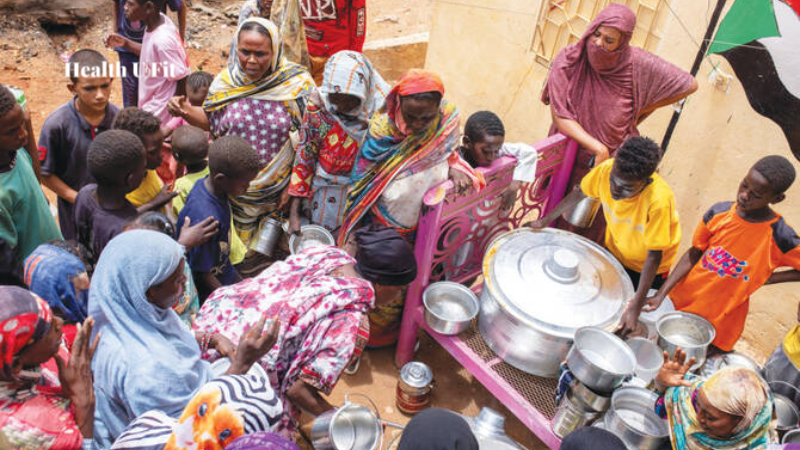
Nearly 6 million people in Haiti are projected to face acute food insecurity in the coming months, highlighting how ongoing gang violence, widespread displacement, and economic pressures continue to deepen the country’s humanitarian crisis, according to a new report released on Thursday.
About 5.8 million Haitians more than half of the population are currently experiencing acute food insecurity, the Integrated Food Security Phase Classification (IPC) reported, with over 1.8 million in the emergency phase and in urgent need of immediate food assistance.
The report said the crisis has been driven by rising insecurity, economic shocks, and repeated disruptions to markets and agricultural activities. Armed groups have expanded their control in several regions, while more than 1.4 million people have been displaced, putting additional pressure on food supplies and pushing vulnerable families deeper into hunger.
The latest IPC projection is slightly lower than the earlier estimate of 5.91 million people facing acute food insecurity, and the number of those in the emergency phase has also declined slightly. These modest improvements have been partly attributed to increased food assistance, easing inflation, and improved harvest conditions in certain areas.
The World Food Programme (WFP) said that continued food assistance has helped around 200,000 Haitians move out of emergency levels of hunger since last year, although aid organizations warn that these recent improvements remain fragile.
“Fighting hunger is essential to restoring stability in Haiti. We cannot build peace if families cannot feed their children,” WFP Haiti Country Director Wanja Kaaria said in a statement.
Humanitarian agencies warned that conditions could worsen again without increased support, pointing to a surge in global fuel prices driven by the Iran war, which has further raised transportation and agricultural production costs.

