

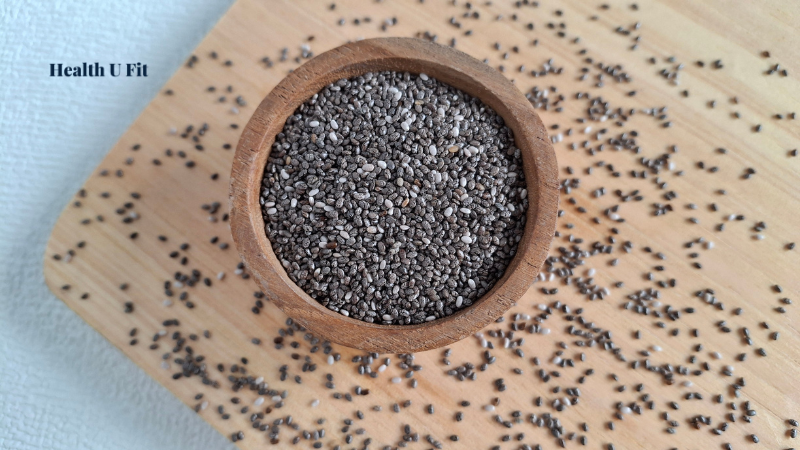
Chia seeds are tiny, nutrient-dense seeds that have gained global recognition as a “superfood” due to their impressive health benefits. Originating from the Salvia hispanica plant, which is native to Central America, chia seeds have been valued for centuries for their energy-boosting properties. Despite their small size, these seeds are packed with essential nutrients, including omega-3 fatty acids, fiber, protein, antioxidants, and important minerals such as calcium, magnesium, and phosphorus.
Consuming chia seeds can support heart health, improve digestion, regulate blood sugar levels, and promote weight management by providing a feeling of fullness. They are also beneficial for bone health due to their high mineral content and may contribute to healthy skin and anti-inflammatory effects because of their antioxidant properties. Chia seeds are incredibly versatile and can be easily incorporated into daily diets sprinkled on cereals, mixed into smoothies, soaked to create chia puddings, or used as a vegan egg substitute in baking.
Here are 7 health benefits of chia seeds, all supported by science.
Highly nutritious
The plant Salvia hispanica L. produces tiny black or white seeds known as chia seeds. It is thought that they are indigenous to Central America.
In the past, the seeds were utilized for cosmetics, religious ceremonies, medicine, and in the meals of the Aztec and Mayan civilizations. Chia seeds are now enjoyed by people worldwide.
Modern science supports the ancient civilizations’ idea that chia seeds are extremely healthy. Actually, just one ounce (oz), or two tablespoons (tbsp) or twenty-eight grams (g), of chia seeds, includes.
- calories: 138
- protein: 4.7 g
- fat: 8.7 g
- alpha-linolenic acid (ALA): 5 g
- carbs: 11.9 g
- fiber: 9.8 g
- calcium: 14% of the Daily Value (DV)
- Iron: 12% of the DV
- Magnesium: 23% of the DV
- phosphorus: 20% of the DV
- zinc: 12% of the DV
- vitamin B1 (thiamine): 15% of the DV
- vitamin B3 (niacin): 16% of the DV
Loaded with antioxidants
Antioxidants are also abundant in chia seeds.
In addition to preventing the rancidity of the delicate lipids in chia seeds, antioxidants also improve human health by scavenging free radicals, which are reactive chemicals that can harm cell components if they accumulate in the body.
For instance, aging and illnesses like cancer are exacerbated by free radical damage.
Chlogenic acid, caffeic acid, myricetin, quercetin, and kaempferol are among the particular antioxidants found in chia seeds. These may all have anticancer qualities in addition to protecting your liver and heart.
For instance, caffeic acid has anti-inflammatory properties while chlorogenic acid may help decrease blood pressure.
May support weight loss
Chia seeds’ protein and fiber content may help people who are attempting to reduce their body weight.
Chia seeds contain about 10 g of nutritional fiber per ounce (28 g). This indicates that they contain an astounding 35% fiber by weight.
Despite conflicting findings, some studies indicate that consuming fiber may help prevent obesity and obesity.
Furthermore, the protein in chia seeds may help reduce food intake and appetite.
Eating 0.33 oz (7 g) or 0.5 oz (14 g) of chia seeds with yogurt for breakfast increased feelings of fullness and reduced short-term food intake compared to eating yogurt alone, according to a study involving 24 individuals.
Nevertheless, research on the potential benefits of chia seeds for weight loss has yielded conflicting findings.
A 2009 study with 90 overweight participants found that taking 50 g of chia seed supplements daily for 12 weeks did not affect body weight or health indicators, including blood pressure and inflammatory markers.
In contrast, a 6-month trial that involved 77 individuals with type 2 diabetes and overweight or obesity who were following a reduced-calorie diet revealed that those who consumed chia seeds regularly lost much more weight than those who were given a placebo.
If you’re attempting to lose weight, chia seeds might be a helpful addition to a healthy, balanced diet, even though they won’t likely help you lose weight on their own.
May lower your risk of heart disease
Eating chia seeds may lower your risk of heart disease since they are abundant in fiber and omega-3 fatty acids.
Chia seeds are the main source of soluble fiber, which can help reduce blood levels of both total and LDL (bad) cholesterol. This can therefore lower your chance of developing heart disease.
Consuming chia seeds’ omega-3 fatty acid, ALA, has also been connected to a lower risk of heart disease.
However, research especially looking into the relationship between chia seeds and heart health has yielded conflicting findings.
According to certain rat studies, chia seeds can reduce oxidative stress and excessive triglyceride levels, two risk factors for heart disease.
Supplementing with chia seeds has been shown in a few human trials to considerably lower blood pressure in those who have hypertension, or high blood pressure, which is a major risk in heart disease.
Although further research is required, chia seeds may generally improve heart health.
It contains many important bone nutrients.
Chia seeds are high in several nutrients that are important for bone health, including:
- calcium
- phosphorus
- magnesium
According to numerous observational studies, maintaining adequate bone mineral density, a measure of bone strength, requires consuming enough of these nutrients.
Furthermore, chia seeds’ ALA may affect bone health. Consuming this nutrient may also be associated with higher bone mineral density, according to observational studies.
Therefore, it’s possible that regularly eating chia seeds could help keep your bones strong.
Rats given chia seeds every day for almost 13 months had higher bone mineral content than a control group, according to one animal study. The authors concluded that ALA facilitated this benefit.
However, only a small number of studies have particularly examined this topic outside of animal studies. More human research is ultimately required.
May reduce blood sugar levels
Chia seeds include fiber and other healthy elements; eating them may help regulate blood sugar.
Those who have diabetes may have elevated blood sugar levels. High fasting blood sugar levels are regularly linked to a higher risk of heart disease and other problems.
Chia seeds have shown promise in improving insulin sensitivity in animal trials. After meals, this could help balance blood sugar levels.
Research in humans is sparse, but some older studies have shown promising results.
Specifically, earlier studies from 2010 and 2013 indicate that eating bread with chia seeds reduces blood sugar spikes after meals in healthy individuals when compared to eating bread without chia seeds.
However, further investigation is required to understand better the relationship between blood sugar management and these nutrient-dense seeds.
Easy to incorporate into your diet
It’s really simple to include chia seeds in your diet. You can add them to almost anything because they have a fairly neutral flavor.
They are a useful addition to recipes because they don’t require grinding, cooking, or any other preparation.
They can be added to oatmeal, pudding, smoothies, baked products, or consumed raw or soaked in juice. They can also be sprinkled over rice dishes, veggies, yogurt, or cereal.
Additionally, they are an excellent binding agent for handmade fritters.
They can be used as an egg substitute and to thicken sauces because they can absorb both oil and water. Additionally, they can be combined with water to form a gel.
The seeds are well-tolerated. However, eating too many seeds at once may cause digestive side effects, such as bloating or diarrhea, if you’re not used to consuming a lot of fiber.
Conclusion
In addition to being high in fiber, minerals, omega-3 fatty acids, and antioxidants, chia seeds are very easy to cook. According to studies, chia seeds may help people lose weight and lower their risk of heart disease, among other health advantages. However, before any definitive findings can be drawn, further human studies are required.

