

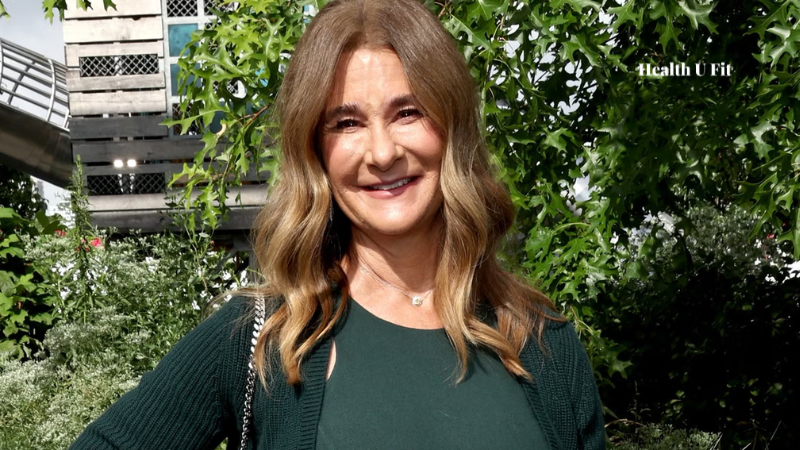
Melinda French Gates has observed that when men fail to act appropriately, women are often expected to step in and provide solutions.
She has consistently responded with action. Over the past two years, the philanthropist and author has contributed more than $400 million toward advancing women’s health, including support for access to contraceptives and abortion care.
She is committing an additional $215 million to further strengthen women’s health initiatives, marking her first major investment focused specifically on midlife health, including menopause.
There’s so much more we can do’
She spent 24 years at the Gates Foundation, which she co-founded with her then-husband Bill Gates, overseeing the distribution of more than $100 billion, much of it directed toward global health initiatives, including maternal care and efforts to address health inequities. (The couple divorced in 2021, and while the terms of their agreement were kept private, it reportedly included a multibillion-dollar fund to support French Gates’ philanthropic work.) She left the foundation in 2024 and went on to launch Pivotal.
Her commitment shifted after the U.S. Supreme Court’s Dobbs decision, which overturned Roe v. Wade and left abortion rights up to states and led her to pledge $1 billion to help women and families. “For too long, a lack of money has forced organizations fighting for women’s rights into a defensive posture while the enemies of progress play offense,” she said at the time. “I want to help even the match.”
French Gates said her latest donation is motivated by what she has observed during her extensive travels—from women’s clinics in Tuscaloosa, Alabama, to schools in Malawi—as well as experiences from her own life.
Whether she is walking with friends through Seattle on a misty Monday morning or on a ski trip where “one of the women had to literally leave the table because she had a hot flash,” menopause often comes up in conversation.
She notes that some of her friends had to consult multiple doctors before receiving appropriate treatment. According to one survey, one in five women waits a year before being diagnosed with menopause. Another study found that 5% of women seeking help for perimenopause or menopause visited as many as 11 doctors before getting a diagnosis.
French Gates considers herself lucky. Her three closest friends are a few years older. “As they started to face this journey, they would be sharing with me what they knew, what they didn’t know, the misinformation,” she says.
She acknowledges that she is privileged to have access to high-quality healthcare, noting that she does not face difficulties in obtaining treatments such as estrogen patches. Even so, she says her doctor was slow to prescribe hormone therapy.
“We are way behind what we ought to know about this phase of life for women. We’re way behind on knowing exactly how the hormones change and at what time. We’re way behind on sharing information with women,” she says.
As she started paying it forward to other women, including younger women in her book club, she felt a responsibility to do more.
“I was like, these are things you need to know. And I started to realize that we are trying to inform one another as women,” French Gates says. “There’s just so much more we can do here to make sure everybody’s trained properly, but also that we get the right information out.”
The investment starts with $10 million allocated to the Menopause Society to help train healthcare providers, including gynecologists and family physicians. The funding will also support continued access to contraception, improve physician training in menopause care, and advance research and treatment for conditions that uniquely or disproportionately affect women.
According to one study, most doctors—including gynecologists—receive limited training on menopause during medical school. In a recent survey of nearly 100 obstetrics and gynecology residency program directors, fewer than one-third reported receiving formal training during their residency programs.
“We still have so many more women to reach and this is going to go a long way to help,” says Stephanie Faubion, medical director of the Menopause Society and director of the Mayo Clinic Center for Women’s Health. Faubion says the grant will help make care accessible and affordable. There are areas without trained menopause providers, and only about two-thirds of menopause-certified providers report that they take insurance.
“For too long, this stage of life – this perimenopause and menopause phase – was honestly invisible,” French Gates says. “It was like a woman was just expected to deal with it behind the scenes.”

